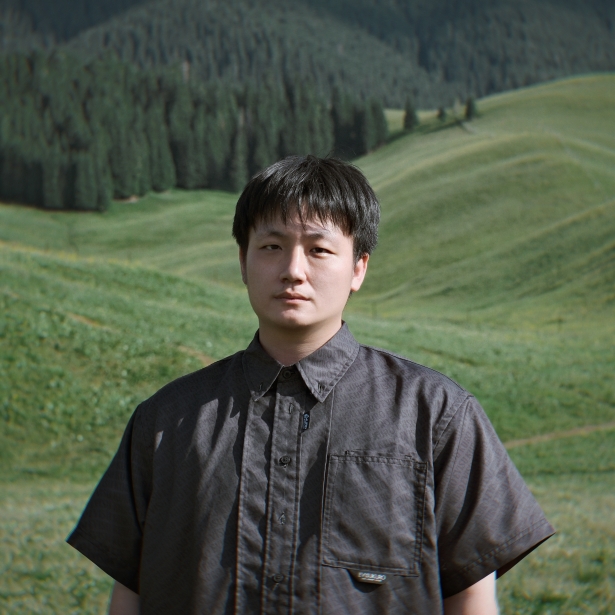
Junxi Liu is a designer from Shenzhen, China, with a Bachelor’s degree in Environmental Design from Guangzhou University. He is currently pursuing a Master of Architecture at the Weitzman School of Design at the University of Pennsylvania. With an interdisciplinary background, he was drawn to architecture for its unique ability to bring together all other forms of art—where music meets painting, painting meets literature, and all ultimately converge within architectural space.
His work focuses on redefining architectural systems through the perspective of form, constantly seeking architecture’s liminal states—those moments in which boundaries blur and spatial logic is reimagined. Beyond the classroom, he engages in travel-based research to experience architecture across cultures and environments, believing that direct experience is essential to architectural learning. He has also participated in global design platforms such as Digital Futures.
His achievements have been recognized with awards including the Schenck-Woodman Award, the E. Lewis Dales Traveling Fellowship, the Atkin Fellowship, and the 2025 Kanter Tritsch Prize in Energy and Architectural Innovation. He is deeply grateful to the mentors and peers who have inspired and supported his journey. For him, this recognition is not only personal but also a celebration of the spirit of collaboration and collective creativity he values deeply.